
The short version: Asking: text the buyer agent the same day (76% prefer it), with a photo and a memory hook, and tell your sellers up front that silence is feedback too. Giving: you’re your buyer’s fiduciary, so don’t share anything your buyer said or thinks without their permission. Offer your own professional opinion of the house instead.
Listing agents need showing feedback. Sellers ask for it every week, and it’s the best early warning that a price, a smell, or a photo isn’t working. Buyer agents are busy, though, and most requests go unanswered. There’s a second problem nobody talks about: the buyer’s agent works for the buyer, and careless feedback can hurt their own client.
Here’s how to handle both sides of it.
If you’re asking: text, and make it memorable
I asked local buyer agents how they actually want to be asked for feedback. It wasn’t close:
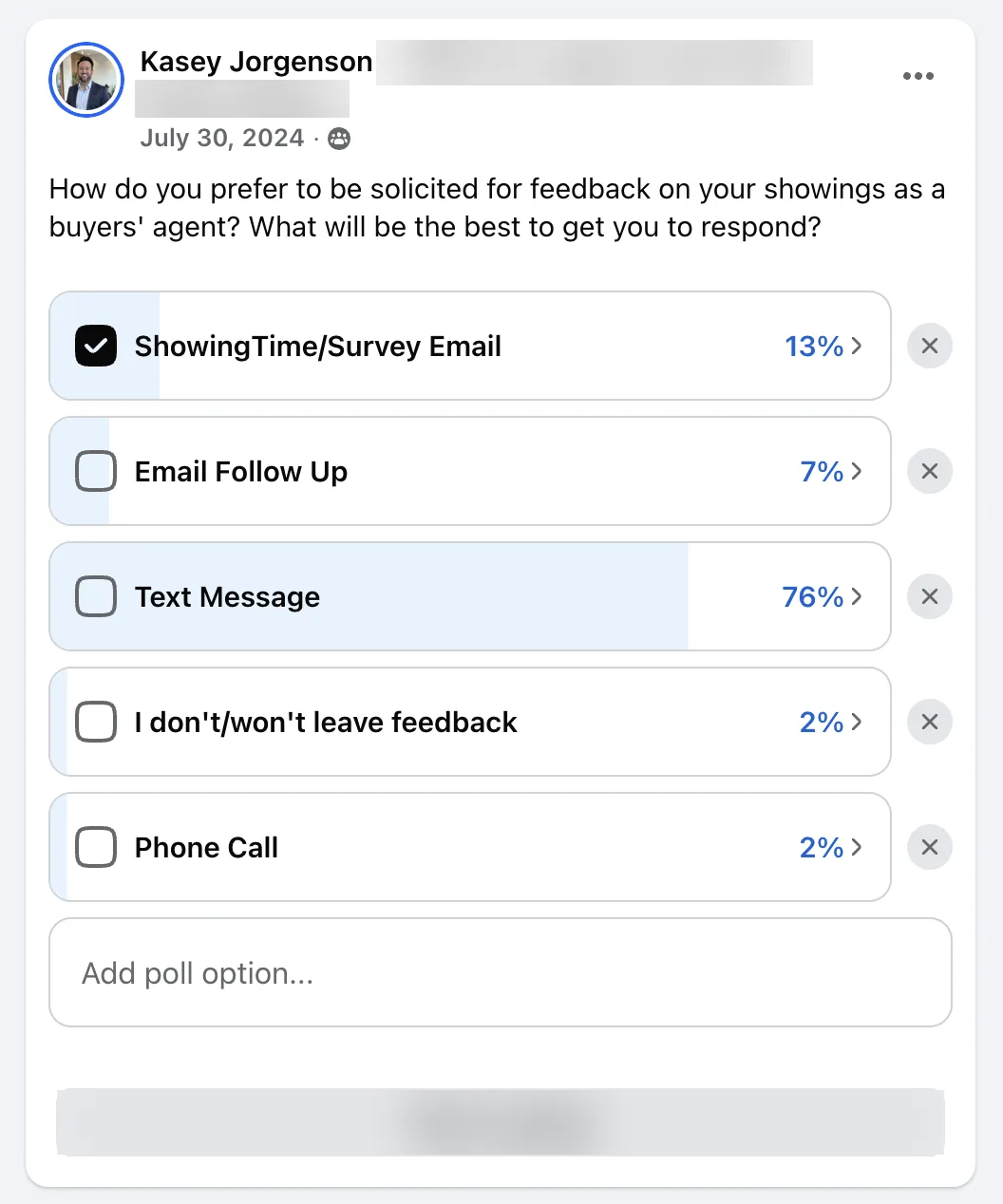
- Text message: 76%
- ShowingTime or survey email: 13%
- Email follow-up: 7%
- Phone call: 2%
- “I don’t/won’t leave feedback”: 2%
So text, and make it easy to answer:
- Text the same day, ideally within a couple of hours of the showing.
- Jog their memory. They saw six houses today. Include a photo or two of the front of the house and a memory hook: “the one with the huge magnolia in the front yard” or “the blue door on the corner lot.”
- Ask one or two questions they can answer with their thumbs: price, condition, layout?
- Let the automated survey go out too, as a backup, not as your only ask.
- Say thank you, and pass the feedback to your seller word for word, minus anything unkind.
Set your seller’s expectations up front
Tell your sellers at the listing appointment: a lot of agents won’t leave feedback, and some will never reply at all. Sometimes that’s because they’re busy. Sometimes it’s because they’re protecting their buyer, which they should be.
And silence is information. If a home is getting showings and nobody is writing an offer or saying anything, that is the feedback. It usually points to price, condition, or the photos. Coach the seller on that before the third quiet weekend, not after the sixth.
If you’re giving feedback: your buyer comes first
When you show a home as a buyer’s agent, you owe your buyer the duties of a fiduciary. Texas law requires a broker to put the client’s interests above everyone else’s, including the broker’s own (Tex. Occ. Code §1101.557). For REALTORS®, the Code of Ethics also bars revealing a client’s confidential information, or using it to their disadvantage, without the client’s consent (Standard of Practice 1-9).
Feedback is where that goes wrong. “They loved it, but it’s a little over their budget” just told the seller your buyer is interested, how interested, and roughly what they can pay. If your buyer writes an offer next week, you’ve handed the other side leverage against your own client.
This isn’t theoretical. A Texas buyer’s agent was sued after sharing the buyer’s feedback with the seller’s side without the buyer’s permission, and it hurt the buyer’s negotiating position. The case settled out of court, so there’s no published opinion to point to, but it’s been used as a cautionary tale at Texas REALTORS® conferences ever since.
The safe practice: don’t share anything your buyer said or thinks without their permission, ideally in writing (a text works). When I want to help a listing agent without hurting my buyer, I say something like:
“I don’t have permission to share my buyer’s thoughts at this time, but my personal advice would be to…”
Then keep it to your own professional read of the house: the carpet in the back bedroom, the price compared to the two closed comps down the street, the photos that undersell the kitchen. Nothing about your buyer’s interest, budget, timing, or plans.
If both buyer and seller are working with the same brokerage, Texas makes it an intermediary relationship with its own confidentiality rules (Tex. Occ. Code §1101.651). Be even more careful there.
It’s a balance
Good relationships with other agents make every deal easier, and answering feedback requests is part of being a good colleague. But your client comes first. Answer the text, be helpful, share your own professional opinion freely, and protect anything that belongs to your buyer.
Sources
- Kasey Jorgenson, poll of Central Texas buyer agents on Facebook (July 30, 2024)
- Texas Occupations Code §1101.557 (duties to the client)
- Texas Occupations Code §1101.651 (intermediary duties)
- NAR Code of Ethics (Standard of Practice 1-9, confidential information)
General information, not legal advice. TREC says I can’t practice law, and I like my license. Run your specific situation past your broker or a real estate attorney.
← All broker notes · Get The Debrief monthly → · Talk with us →