
The short version: Open Real Estate, launched October 26, 2026 by Keller Williams, AGNT (eXp), HomeServices of America, and Real/RE/MAX, is not a national MLS but a national listing database with its own rules on top of the MLS. Its FAQ requires every listing within one business day of the listing agreement being signed, gives sellers no way to keep a listing out (only a choice of who sees it), and gives ORE full discretion over syndication. It promises members visibility on sold homes with no Texas non-disclosure carve-out. Jorgenson Real Estate is not signing ORE’s support letter while governance, data licensing, and Texas sold-data handling are unpublished.
My feed is full of KW, eXp, and Real agents celebrating this “Open Real Estate” news like it’s the second coming. So I did the boring thing and read the actual fine print: their FAQ, their homepage, and their terms. Here’s what’s in it, and where I land.

It’s Not a National MLS. It’s a Second Rulebook.
First, credit where it’s due: they say plainly that Open Real Estate is not a national MLS, and that local MLSs keep their own rules. What it actually is: a new national listing database run by four national brokerages (Keller Williams, eXp’s parent company AGNT, HomeServices of America, and the combined Real/RE/MAX), with its own set of rules that sits on top of your MLS.
Nothing is built yet. They plan to pick a technology vendor in the first quarter of 2027, and governance is still being worked out. Reporting from the launch says the four founders expect to keep director seats even after an independent leadership team is hired.
Three Rules That Give Me Pause

1. Every listing goes in within ONE business day of signing the listing agreement. Not when it goes public with any marketing...when you actually sign. That’s earlier than Clear Cooperation, which starts the clock at public marketing. (To be precise: their homepage summary says “public listings,” but the FAQ says all listings, from the day the listing agreement is executed. The FAQ is the one with the detail.)
2. There’s no option for a seller to keep it out. The seller’s only choice is who gets to see it. In “participant view,” agents at other member brokerages can see it, and nobody can market it publicly, not even the listing agent. In “market” view, it goes out to everyone. There’s no door marked “not in the database.”
3. ORE keeps “full discretion” over where your listing gets syndicated. Not you. Not your seller. There’s no published list of where listings will go and no channel-by-channel controls for the listing broker.
Those rules matter because Texas listing brokers are fiduciaries. Under the Unlock listing agreement, a seller can instruct us in writing not to file their listing with the MLS or “any other listing service.” How does a database that requires every listing within one business day honor that? Nobody’s said yet.
The Texas Problem: Sold Prices
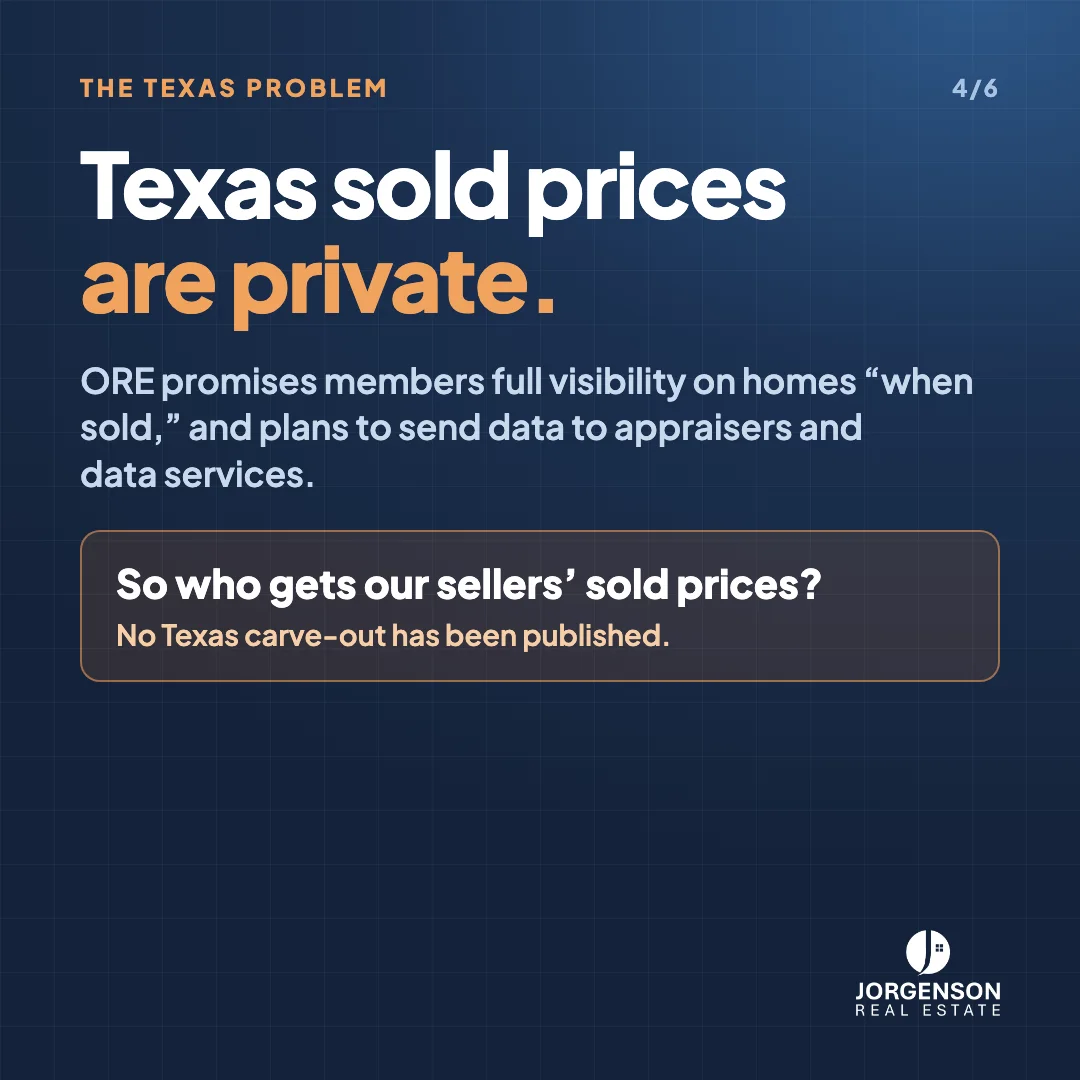
Texas is a non-disclosure state. Sale prices aren’t public record here, and Unlock MLS keeps sold prices off the internet for a reason. Austin has already been through a fight over the appraisal district buying MLS sales data.
ORE promises its members full visibility on homes “when sold,” and its homepage names appraisers and data services among the places the data can go. There’s no Texas carve-out published anywhere. So who gets our sellers’ sold prices? Appraisal districts? Data companies? Nobody’s said yet.
I’m Not on Team Compass Either
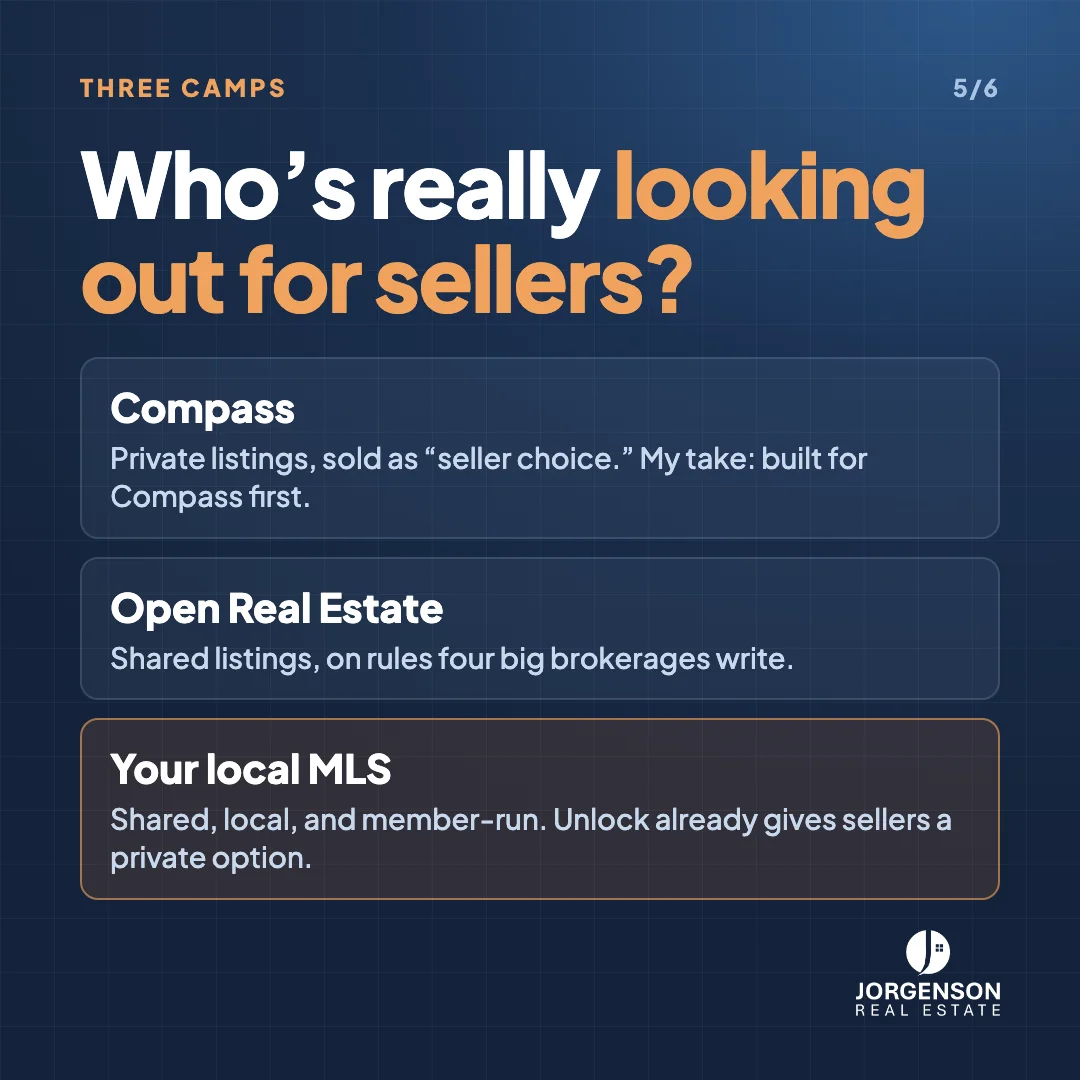
I believe sellers should have real choices. But Compass’s version of “seller choice” sure looks like it was built for Compass first. When Unlock MLS refused this month to waive its Clear Cooperation rule for Compass, Compass said it plans to sue. That’s my opinion of their motives, and you can read the timeline yourself in our post on every listing option a Central Texas seller should hear.
Where I Land
I’m pretty libertarian when it comes to rules. I don’t want a bunch of them. But sharing data is the whole reason the MLS works, and you need SOME rules to keep that fair. Just not so many that they handcuff fiduciary agents and their sellers.
The MLS isn’t perfect. But it’s local, it’s member-run, and here in Austin, Unlock already gives sellers a private option with Flex listings: in the MLS, visible to every Unlock agent, with no public marketing. That’s seller choice without a new rulebook.
So no, JRE isn’t signing anything in support of ORE right now. Their support letter isn’t binding, but it puts your name and logo behind the project. I’m not putting our name behind a rulebook four of our competitors are writing before anyone’s seen the governance, the data license, or how Texas sold data gets handled. Their own terms call the value-sharing promise “goals only.”
Sellers should have a choice. Fair rules should be in place. Stop handcuffing sellers and brokerages in the interest of self-preservation first.
Based on Open Real Estate’s FAQ, homepage, and terms as of October 27, 2026, and the coverage listed below. ORE’s rules are drafts and may change. Opinions are Kasey Jorgenson’s, Broker. Not legal advice.
Sources
- Open Real Estate, FAQ
- Open Real Estate, homepage and letter of support
- Open Real Estate, Terms
- HousingWire, Open Real Estate launch interview (October 27, 2026)
- Real Estate News, 4 major brokerage firms unveil Open Real Estate (October 26, 2026)
- Real Estate News, Compass plans to sue after Unlock defies demand letter (October 7, 2026)
- Unlock MLS, Compliance (Clear Cooperation and sold-data display)
- Austin American-Statesman, Realtors group and Travis appraisal district at odds over MLS data (May 7, 2019)
General information, not legal advice. TREC says I can’t practice law, and I like my license. Run your specific situation past your broker or a real estate attorney.
← All broker notes · Get The Debrief monthly → · Talk with us →